Our government works hard to protect us from all sorts of threats. While sometimes threats are easily seen, other times our government has to safeguard us against threats that are not easily seen. Serious animal diseases (also known as zoonotic diseases) can, if not handled properly, devastate our communities. That’s why the U.S. Department of Agriculture (USDA) and the U.S. Department of Homeland Security (DHS) have teamed up to build a new, state-of-the-art National Bio and Agro-Defense Facility (NBAF). This facility will help us learn more about animal diseases and how best to protect our population from an outbreak.
About the project
The NBAF will, according to the USDA, “be the premier center of scientific excellence for the study of transboundary, emerging, and zoonotic animal diseases (those transmitted between animals and humans) that threaten U.S. agriculture economy, food supply, and public health.” In other words, the facility and the people working inside it will study the diseases that transmit between humans and animals in order to best prevent and contain them. The facility will take over for the Plum Island Animal Disease Center while also providing additional capabilities and resources that the previous facility lacked.
The facility
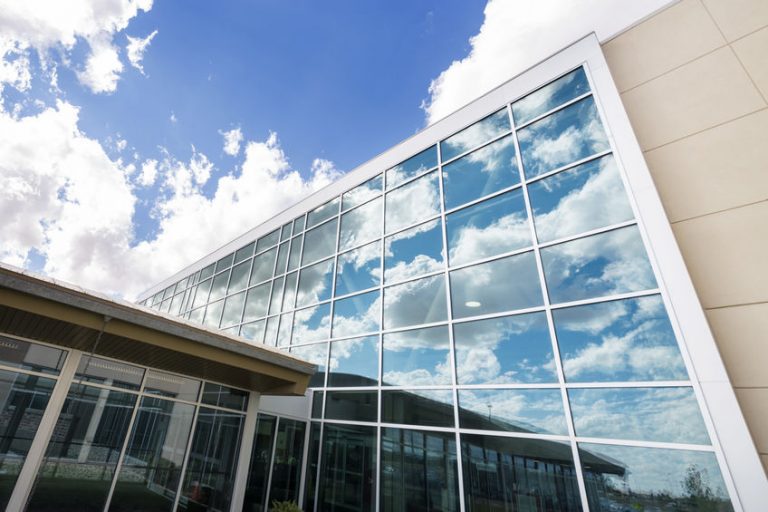
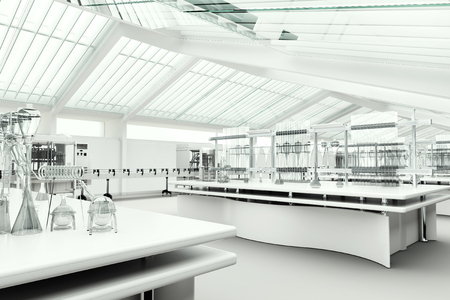
Located in Manhattan, Kansas, the NBAF will be over 700,000 square feet, have over 400 working personnel, and it will act as the nation’s only maximum containment space for large animals. While there will be some office space, the majority of the facility will be used for Biosafety Levels (BSL)—biological laboratories that are designed to insulate contagious diseases, protecting lab personnel as well as the surrounding environment. The NBAF, the USDA claims, will be “one of the most advanced biocontainment facilities in the world[.]”
Why do we need it?
Having a facility like the NBAF is necessary for both our public health and security. Zoonotic diseases (diseases that are spread between animals and people) count for 75% of the new and emerging infectious diseases that are affecting the world population. Without proper procedures, the bacteria for these diseases can wind up in our food sources and water supplies. While some people who are infected exhibit few symptoms, others can wind up seriously ill with even the risk of death.
At the NBAF, however, scientists will be able to study these diseases in order to better protect the U.S. population from an outbreak. They can research potential treatments and find new ways of controlling diseases that we do not yet have a cure for. Plus, thanks to biocontainment features, they will be able to study these diseases safely even in the case of a natural disaster such as a tornado (a common occurrence in a place like Kansas).
When will it be open?
As of August 2019, the NBAF project is approximately 83 percent complete. The construction of the main laboratory began in May 2015 and is currently on schedule for completion in May 2021. However, the facility won’t be operational until all of the proper permits and registrations are received. The estimated date for this is December 2022. Once this occurs, the USDA will start transitioning operations from the Plum Island Animal Disease Center to the NBAF. This transition will be complete by the year 2023.
At Construction Protection Systems, we’re proud to have had the opportunity to play a part, however small, in the development of the nation’s first National Bio and Agro-Defense Facility. Stay tuned for more updates from the makers of 1-2-3 Door Shield—the original, reusable door protection system.


Just in time for the school’s 50th anniversary, Texas A&M International University (TAMIU) in Laredo
Law enforcement agencies in Georgia’s Coast Plains region will spend less time waiting for forensic testing results, thanks to a new crime laboratory operated by the Georgia Bureau of Investigations (GBI) that recently opened in the city of Pooler.
The Salt Lake City International Airport is currently undergoing a massive redevelopment effort that airport officials are calling 
Downtown Vancouver is the new home of an “international entertainment destination” that constitutes one of the largest construction projects the city has seen in decades. Located next to the BC Place Stadium,
The largest hospital in Kansas City just got bigger thanks to a $360 million expansion that was completed in late 2017. Cambridge Tower A is a cutting-edge inpatient care facility that adds 92 beds and 11 operating rooms to the University of Kansas Health System. The 11-story tower also allows the hospital’s entire oncology department to be housed under one roof for the first time.
After four years of construction, San Francisco’s newest mixed-use skyscraper has officially earned the distinction of being
Based in Los Angeles, the Viceroy Hotel Group operates more than a dozen hotels throughout North America, Europe, Asia and the Middle East. Now, the company has added yet another hotel to its portfolio in Chicago’s Gold Coast Historic District.
Recent Comments